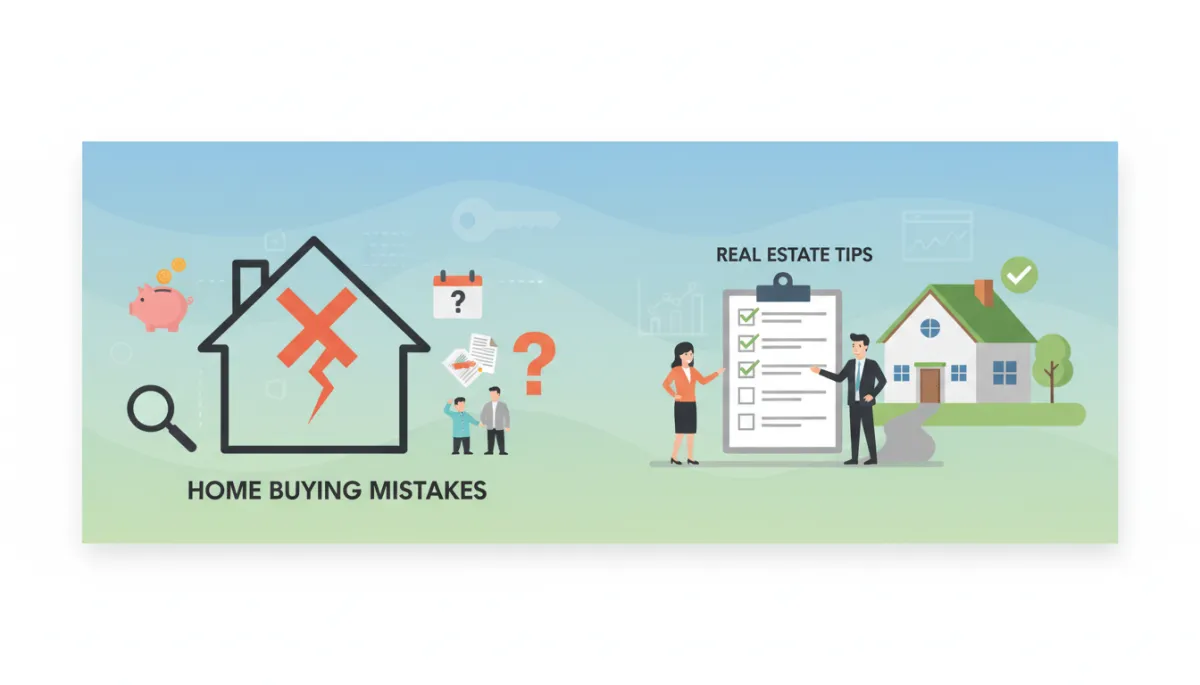
Avoid Top 5 Mistakes for First-Time Home Buyers in Chicagoland
Real Estate, First-time Home Buyers, Home Buyer Guide
The Top 5 Mistakes First-Time Home Buyers Make (And How to Avoid Them)
Buying a house for the first time is exciting, emotional, and often a bit overwhelming. This practical home buyer guide walks you through the top home buying mistakes first-time home buyers make, with clear real estate tips and property purchase advice you can act on today.
Why First-Time Home Buyers Are Vulnerable to Costly Mistakes

First-time home buyers are entering unfamiliar territory. You are making one of the biggest financial commitments of your life, often while juggling tight timelines, emotional decisions, and conflicting property purchase advice from friends, family, and the internet. Without a clear home buyer guide, it is easy to rush, overlook details, or let your heart overrule your budget.
The good news: most home buying mistakes are predictable and preventable. By understanding the top five pitfalls that trip up new buyers, you can approach buying a house with more confidence, clarity, and control.
Mistake #1: Shopping for Homes Before Defining a Realistic Budget
One of the biggest home buying mistakes is falling in love with a property before you know exactly what you can afford. Many first-time home buyers start browsing listings, visiting open houses, and picturing furniture layouts long before speaking with a lender. This leads to disappointment, wasted time, and sometimes, overextending financially just to “make it work.”
Get pre-approved, not just pre-qualified. A full pre-approval gives you a clear price range and shows sellers you are serious when buying a house.
Look beyond the mortgage payment. Factor in property taxes, homeowner’s insurance, utilities, HOA fees, maintenance, and potential repairs to understand your true monthly cost.
Protect your lifestyle. Your budget should still allow room for savings, travel, and everyday living, not just the mortgage.
💡 Real Estate Tip: Aim for a total monthly housing cost (mortgage, taxes, insurance, HOA) that stays comfortably below 30% of your gross monthly income.
Mistake #2: Ignoring Hidden and Upfront Costs of Buying a House
Another common trap for first-time home buyers is underestimating how much cash you will need beyond the down payment. A polished listing price can hide a long list of additional expenses that quickly add up and strain your savings if you are not prepared.

Planning for upfront costs reduces stress and prevents last-minute financial surprises.
A well-rounded home buyer guide should highlight these typical upfront costs:
Closing costs: Usually 2–5% of the purchase price, covering lender fees, title insurance, appraisal, and more.
Home inspection and appraisal: Essential property purchase advice is to never skip these, even if the market is competitive.
Moving expenses: Trucks, packing supplies, time off work, and possible temporary storage.
Immediate repairs and furnishings: Even “move-in ready” homes often need small fixes, window coverings, or appliances.
📌 Key Takeaway: Build a separate savings cushion for closing costs and move-in expenses, so your emergency fund stays intact after buying a house.
Mistake #3: Letting Emotions Overrule Location and Long-Term Needs
It is natural for first-time home buyers to fall for stylish finishes, trendy kitchens, or a beautifully staged living room. But one of the most serious home buying mistakes is prioritizing cosmetic features over location, layout, and long-term lifestyle needs. Paint and fixtures can be changed; your commute, school district, and neighborhood cannot.
As you evaluate properties, use this simple real estate tip: judge each home on how it will work for your life in five to seven years, not just how it feels today. Ask yourself:
Will the location still suit my job, family plans, or lifestyle in a few years?
Does the layout give me flexibility for remote work, guests, or a growing family?
How will noise, traffic, or neighborhood development affect my daily life and future resale value?
💡 Real Estate Tip: Create two lists before touring homes: a must-have list focused on location and function, and a nice-to-have list for style and upgrades. Stick to the must-haves when emotions run high.
Mistake #4: Skipping Professional Guidance and Relying Only on Online Research
Online listings, mortgage calculators, and videos are incredibly helpful, but they are not a complete home buyer guide. A major mistake first-time home buyers make is assuming they can navigate complex contracts, negotiations, and inspections alone just because they have done some research. In reality, buying a house involves legal, financial, and market-specific details that are easy to miss without expert support.
Surround yourself with a trusted team:
Buyer’s agent: A dedicated real estate professional who represents your interests, explains contracts, and uses local knowledge to spot issues or opportunities you might overlook.
Mortgage advisor: Helps you compare loan options, understand rate structures, and choose a mortgage that fits both your short- and long-term goals.
Home inspector: Provides detailed property purchase advice on the true condition of the home and potential future costs.
📌 Key Takeaway: For most buyers, the seller pays the buyer’s agent commission, so you get professional representation at no direct cost. Skipping this help is rarely a smart savings strategy.
Mistake #5: Rushing the Process or Overreacting to a Competitive Market
In many markets, first-time home buyers face bidding wars, tight inventory, and pressure to make quick decisions. One of the most dangerous home buying mistakes is letting fear of missing out push you into waiving important protections or stretching beyond your comfort zone just to “win” a house.
A calm, strategic approach will serve you better than a rushed one. Consider these real estate tips when the market feels intense:
Decide your absolute maximum budget before you write an offer, and do not exceed it, no matter how emotionally attached you feel.
Be cautious about waiving contingencies like inspection or financing. These exist to protect you from serious financial risk.
Remember that not getting one house simply means you are still in the search for the right house. Patience often leads to a better fit.
💡 Real Estate Tip: Set a “cooling-off rule” with your agent. For example, you will sleep on any offer decision over a certain price, even in a hot market.
Turning These Mistakes into a Step-by-Step Home Buyer Guide
When you flip these common errors into action steps, you get a simple, reliable framework for buying a house wisely. Use the top five mistakes as a checklist to guide each stage of your property search and purchase.
Start with finances: Clean up your credit, get pre-approved, and define a realistic monthly budget.
Plan for all costs: Estimate down payment, closing costs, and move-in expenses so there are no surprises.
Clarify your priorities: Choose location, commute, and layout based on long-term needs, not just first impressions.
Build your team: Work with a buyer’s agent, mortgage professional, and inspector you trust for personalized property purchase advice.
Move at your pace: Stay firm on your budget and protections, even when the market feels competitive.
Final Thoughts: Confident, Informed First-Time Home Buyers Win
Becoming a homeowner does not have to mean learning everything the hard way. By understanding the top five mistakes first-time home buyers make, you are already ahead of the curve. Use these real estate tips as a living home buyer guide: revisit them before you tour homes, when you review listings, and again before you submit an offer.
The right property purchase advice is not about chasing the “perfect” house; it is about securing a home that fits your life, your budget, and your future plans. When you combine clear financial boundaries, realistic expectations, and professional support, buying a house becomes far less intimidating—and far more rewarding.
As you move forward, remember: you do not need to be an expert in real estate to make a smart decision. You simply need to be a prepared, informed, and patient buyer who knows which home buying mistakes to avoid. That alone can save you thousands of dollars, countless hours, and years of regret—and help you step into your first home with confidence and peace of mind.